Sometimes, You Aren't Rereading the Messages Because You Miss the Conversation. You're Remembering How It Felt When Someone Couldn't Wait to Talk to You.
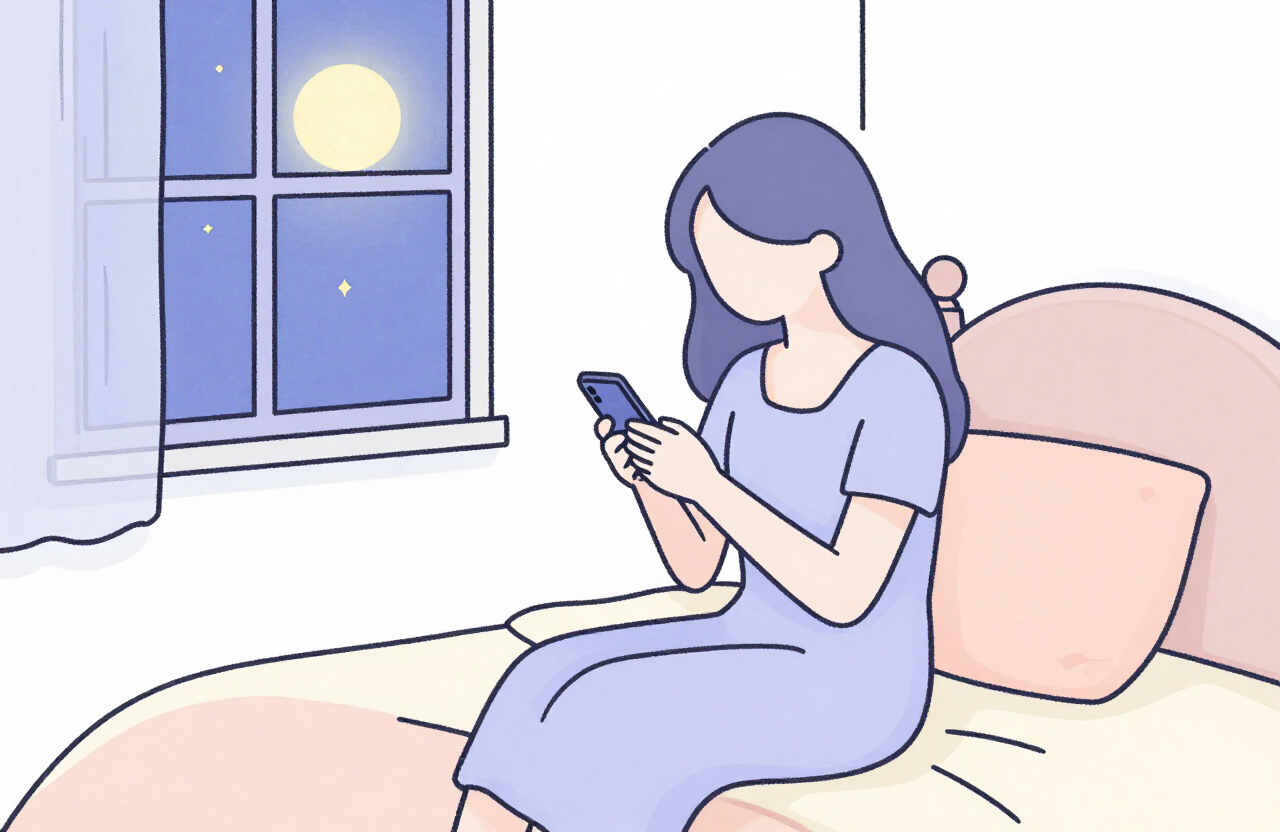
It is late, far too late to be awake, and you are doing it again — scrolling back through a conversation that ended a long time ago. You tell yourself you are only looking for something specific, a link, an address, a name. But the truth is simpler and harder than that. You are not searching for information. You are searching for a feeling.
There is a particular kind of ache that lives inside an old message thread. You scroll up, past the awkward hellos, past the first tentative questions, and you land in the stretch where everything was easy — where replies came fast and full, where a single notification could change the entire shape of your evening. You read them now and you can almost feel it: that small, electric thrill of being wanted. The way your stomach dipped when their name lit up your screen. The way you used to type and delete and retype, wanting to say exactly the right thing, because what you said felt like it mattered.
That is the thing about rereading old messages. You are not really missing the conversation. You are missing the version of yourself you were in it — the one who felt chosen, interesting, eagerly awaited. You are missing the evidence that, for a little while, someone could not wait to talk to you.
At the beginning, the words came so easily. Good morning texts that arrived before you were even awake. Long, rambling messages about nothing in particular, sent simply because the other person wanted to keep the thread alive. Inside jokes that built up over days, a private language no one else would understand. You would send a single emoji and they would know exactly what you meant. The conversation had a rhythm, a warmth, a kind of music to it, and you did not have to try — you only had to show up.
And then, somewhere along the way, the music changed. You notice it now, reading backward. The replies get shorter. The gaps between them stretch. The good mornings come later, or stop coming at all. Where there used to be paragraphs, there are now single words. Where there used to be questions, there are now answers that lead nowhere. It is rarely a single moment that ends things. It is a slow thinning out, a quiet withdrawal that you felt long before you were willing to name it.
What makes these threads so hard to let go of is that they hold two people at once: the one who was eager, and the one who slowly stopped being eager. Reading them is like watching the same relationship from two different angles. The early messages still glow with warmth, still make you smile at a joke you had forgotten. But the later ones carry a different weight. You can feel the distance growing between the lines, the unanswered questions you never asked, the things you wanted to say and swallowed instead.
We hold onto these digital memories for reasons we do not always admit. Sometimes it is because the conversation never got a real ending — there was no fight, no clear goodbye, just a fading — and the unanswered questions keep the thread feeling open, unfinished, as though there might still be something left to say. Sometimes it is because those messages are the last place you felt truly seen, and giving them up would mean accepting that the feeling is gone. Sometimes it is simply the comfort of proof: proof that it happened, that you mattered to someone, that for a season you were the person they reached for first.
But there is a cost to living in old messages. The same words that once made you happy now make you ache, because you know how the story ends. You are reading a beginning while already knowing the middle and the close, and that knowledge colors everything. The good morning text that once made your day now reminds you of all the mornings that stopped coming. The inside joke now feels like a relic from a version of the two of you that no longer exists.
It is worth being honest with yourself about what you are actually missing. Often, it is not the person — not really, not entirely. It is the attention. It is the excitement of being thought of. It is the particular sweetness of knowing someone was eager to hear from you, that your words carried weight in someone else's day. We grieve the feeling of being wanted sometimes more than we grieve the one who made us feel that way, and there is no shame in that. Wanting to be wanted is one of the most human things there is.
You do not have to delete the thread to heal. Some people do, and it helps. Others keep it, the way you might keep an old letter in a drawer — not to reread constantly, but to know it is there, a record of something that was real. What matters is that you stop using it as a place to live. The messages are a memory now, not a home. They can tell you something true about what you long for — connection, attention, the feeling of mattering to someone — without becoming the place you go to find it.
Because here is what the old messages cannot give you, no matter how many times you read them: a new beginning. They can only ever take you back. And you, despite everything, are still moving forward. The excitement you are chasing, the feeling of being eagerly awaited, the warmth of someone who could not wait to talk to you — that is not gone from the world. It is only gone from this thread. Someday, with someone else, the phone will light up again, and this time you will not have to scroll back to remember what it felt like. You will be living it.
Do you ever revisit old conversations with someone you no longer speak to?
Share your experience in the comments — your story may be exactly what someone else needs to read today.
Letters on Love
Thoughtful reflections on relationships, intimacy, heartbreak, emotional connection, and the experiences that shape the way we love. Join us for conversations about the complicated and beautiful side of human relationships.
By subscribing, you agree to receive emails from Your True Love. Unsubscribe anytime.